Product Description
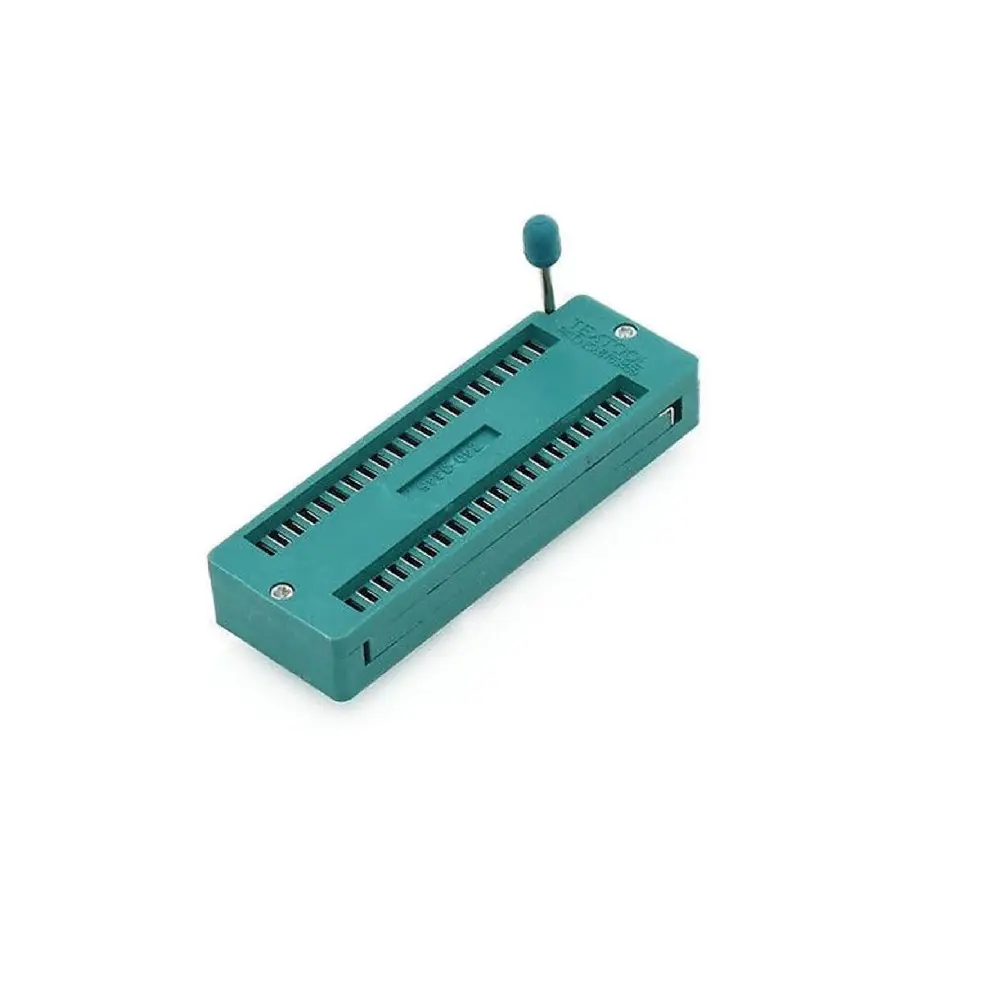
The 40-Pin Universal ZIF (Zero Insertion Force) Socket is a professional-grade component essential for IC testing, programming, and prototyping. Unlike standard IC sockets that require physical force to push the chip into the pins, this ZIF socket uses a mechanical locking lever system. When the lever is up, the internal contacts are open, allowing you to drop an IC in effortlessly. Closing the lever clamps the gold-plated contacts onto the IC pins with consistent pressure. This design prevents the bending or breaking of delicate pins on microcontrollers like the ATmega328, 8051, or PIC series, making it indispensable for frequent chip swapping in development environments.
Key Features
Zero Insertion Force: Eliminates mechanical stress on IC pins during insertion and removal, extending the life of your chips.
Universal Compatibility: Narrow-to-wide design accommodates 0.3" to 0.6" row-spaced ICs (DIP packages) from 8 pins up to 40 pins.
Gold-Plated Contacts: Ensures high-conductivity and low-contact resistance for reliable data transfer and programming.
Rugged Locking Lever: High-durability handle allows for quick one-handed operation and provides tactile confirmation of a secure connection.
Breadboard & PCB Friendly: Features standard 2.54mm (0.1 inch) pin spacing, allowing it to be soldered onto prototyping boards or plugged into some breadboards.