Processor Architecture: 32-bit dual-core processor operating at a tunable frequency from 80 MHz to 240 MHz.
Ultra-Low Power Co-processor: Includes an independent ULP co-processor for monitoring GPIOs or internal sensors while the main cores are in deep sleep.
Advanced Peripherals: Integrated capacitive touch sensors, Hall sensors, SD card interface, high-speed SPI, I2S, I2C, and UART hardware.
Security Suite: Features hardware-accelerated encryption including AES, SHA-2, RSA, ECC, and a Random Number Generator (RNG).
Deep Sleep Efficiency: Consumes as little as 10µA in deep sleep mode, making it ideal for battery-operated remote sensor nodes.
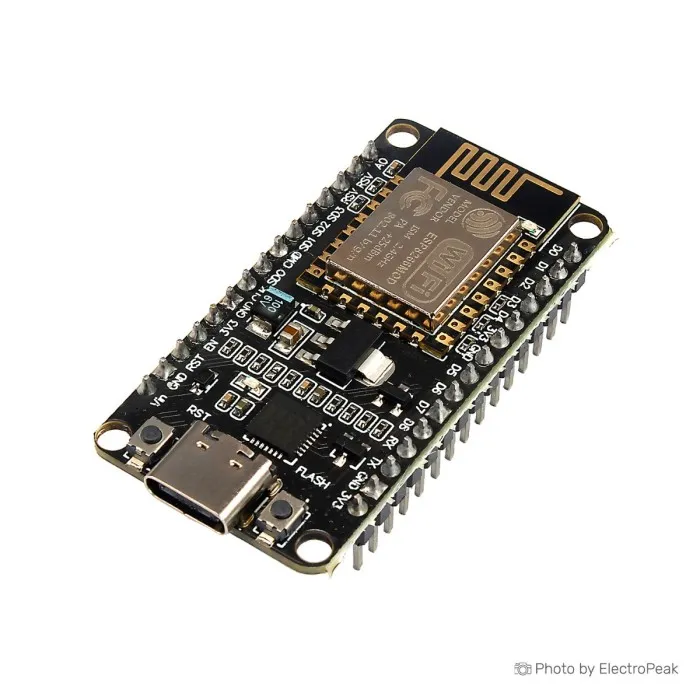
Power Management: Onboard AMS1117 3.3V regulator handles the current surges required during WiFi transmission bursts (up to 500mA).
Memory Architecture: 448 KB of ROM for booting and core functions, alongside 520 KB of internal SRAM for data and instructions.
External Flash: Equipped with 4MB of external SPI Flash memory to store large programs, file systems (SPIFFS/LittleFS), and web assets.
PWM Channels: 16 independent LED PWM channels with high-resolution control, perfect for motor drivers and RGB lighting.
ADC and DAC: 12-bit Analog-to-Digital Converter across multiple channels and two 8-bit Digital-to-Analog Converter channels.
Antenna Design: Features a high-performance PCB trace antenna for reliable wireless range without external hardware.
Input Voltage Flexibility: Can be powered via the 5V Type-C port, the Vin pin (5V-12V), or directly through the 3.3V pin (regulated).
Firmware Support: Fully compatible with Arduino IDE, MicroPython, Espressif IoT Development Framework (ESP-IDF), and Lua.
Logic Level: Operates strictly on 3.3V logic; level shifters are required when interfacing with 5V sensors or displays.
OTA Updates: Supports Over-The-Air (OTA) firmware updates, allowing you to reprogram the board remotely over WiFi.