Product Description & Technical Details
Product Description
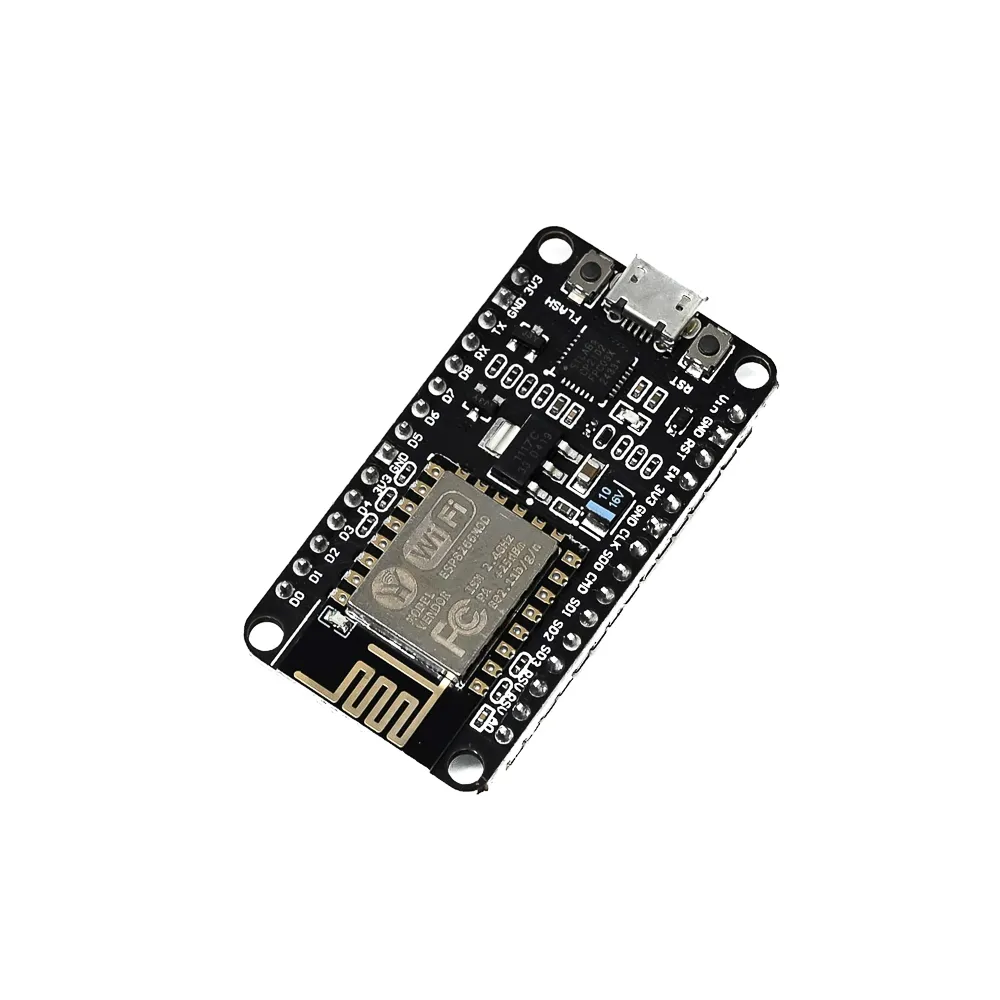
The NodeMCU V2 CP2102 is an open-source, high-performance development kit designed for rapid IoT prototyping. Based on the powerful ESP8266 (ESP-12E) WiFi module, this board integrates a 5V-to-3.3V voltage regulator and the premium Silicon Labs CP2102 USB-to-UART bridge. This specific version is often called the "V2" or "Amica" board; it is narrower than the CH340 versions, allowing it to fit perfectly on a standard breadboard with accessible pin rows on both sides. Whether you are building a WiFi-connected weather station, a smart light controller, or a small web server, the NodeMCU offers a robust and easy-to-program environment compatible with Arduino IDE, MicroPython, and Lua.
Key Highlights
Stable CP2102 Chipset: Equipped with the professional-grade CP2102 serial IC, which is renowned for its driver stability and reliable high-speed communication compared to cheaper alternatives.
Breadboard Friendly: The slim form factor is specifically designed to leave one row of breadboard holes free on each side, making it much easier to connect sensors and jumpers.
Integrated WiFi: Features a complete 802.11 b/g/n stack with a PCB trace antenna, enabling your projects to connect to the internet or act as a standalone Access Point.
Flexible Programming: Fully compatible with the Arduino IDE, offering a massive ecosystem of libraries, as well as native support for NodeMCU Lua and MicroPython.
Rich I/O Features: Breaks out 10 GPIOs, every one of which can be configured for PWM, I2C, SPI, or 1-Wire communication, along with one 10-bit Analog Input (ADC).
Technical Specifications
CPU: Tensilica L106 32-bit RISC processor
Clock Speed: 80MHz (Default) / 160MHz
SRAM: 64 KB (Instruction) + 96 KB (Data)
USB Interface: Micro-USB
Antenna: Integrated PCB Antenna
Dimensions: ~48mm x 25mm
Installation Tip from Robogears
The CP2102 driver is usually pre-installed on modern operating systems. However, if your computer does not see the COM port, download the "CP210x USB to UART Bridge VCP Drivers" from Silicon Labs. In the Arduino IDE, select "NodeMCU 1.0 (ESP-12E Module)" as your board. For projects using several sensors or NeoPixels, avoid drawing all power from the NodeMCU's 3.3V pin, as it has a limited current capacity (~500mA). Instead, use an external power source and connect the grounds together.
Note: The product images provided are for illustration purposes only. The actual product may vary slightly in terms of design, color, or component layout due to manufacturing updates, but technical specifications will remain as described.