Product Description
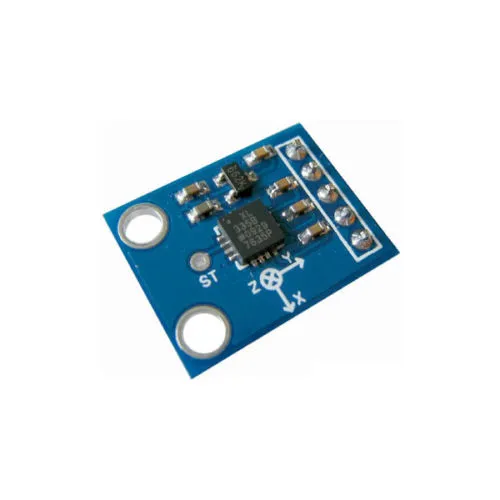
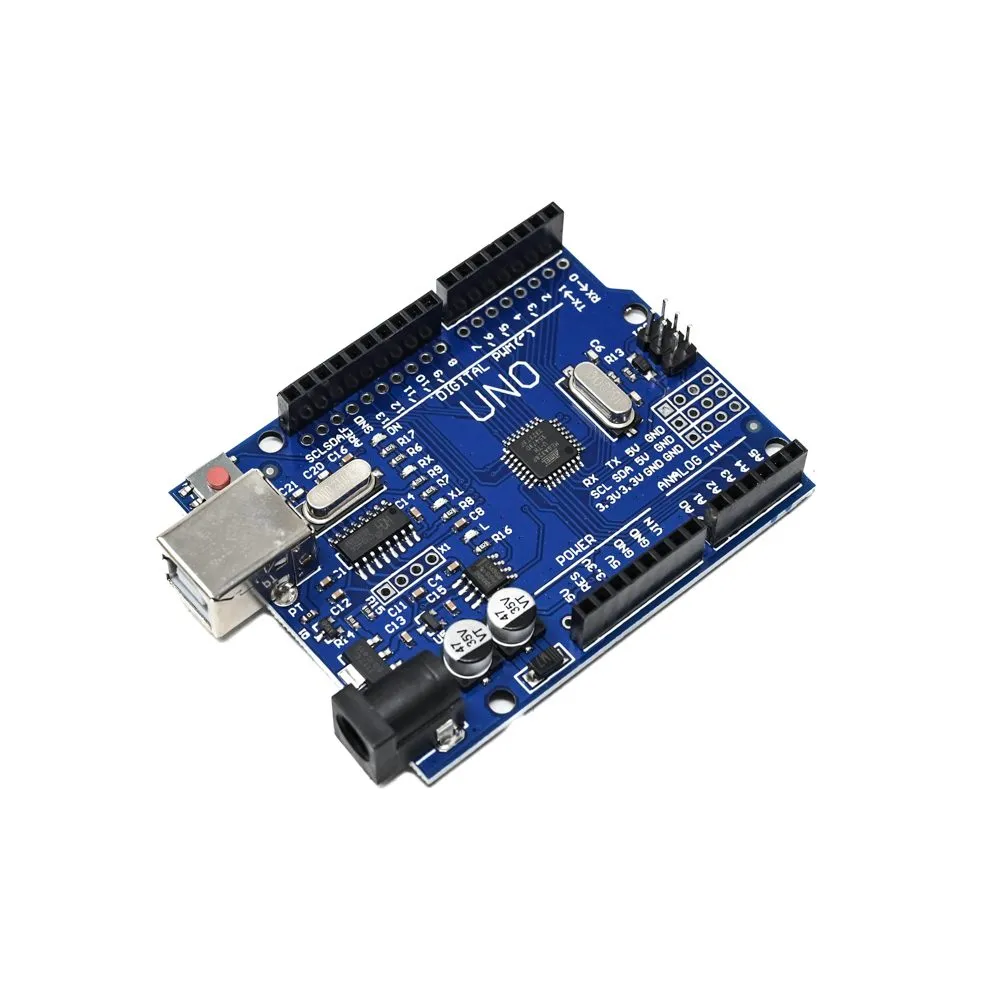
The ADXL335 is a complete, small, low-profile 3-axis accelerometer with signal-conditioned voltage outputs. This module measures acceleration with a minimum full-scale range of ±3g, making it ideal for sensing static acceleration of gravity in tilt-sensing applications, as well as dynamic acceleration resulting from motion, shock, or vibration. Unlike digital accelerometers, the ADXL335 provides three separate analog voltages for the X, Y, and Z axes, allowing for direct interfacing with the ADC (Analog-to-Digital Converter) of an Arduino or other microcontrollers without the need for complex library protocols. It is a favorite for flight stabilization, gaming controllers, and robotic balance systems.
Key Features
3-Axis Sensing: Simultaneously measures tilt and motion in X, Y, and Z planes for comprehensive spatial awareness.
Direct Analog Output: Provides a simple voltage-per-g output, making it compatible with any microcontroller that has analog input pins.
Ultra-Low Power Consumption: Consumes only 350 µA, which is significantly lower than most digital counterparts, extending battery life in IoT nodes.
High Shock Survival: The MEMS sensor is designed to survive mechanical shocks up to 10,000g, ensuring durability in high-impact projects.
Integrated Signal Conditioning: Features on-board low-pass filtering and amplification to deliver a clean, stable signal directly to the output pins.