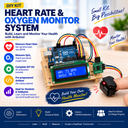
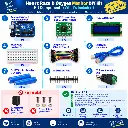
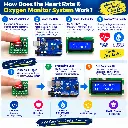
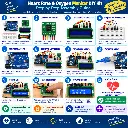
FAQ
1. What does this project measure?
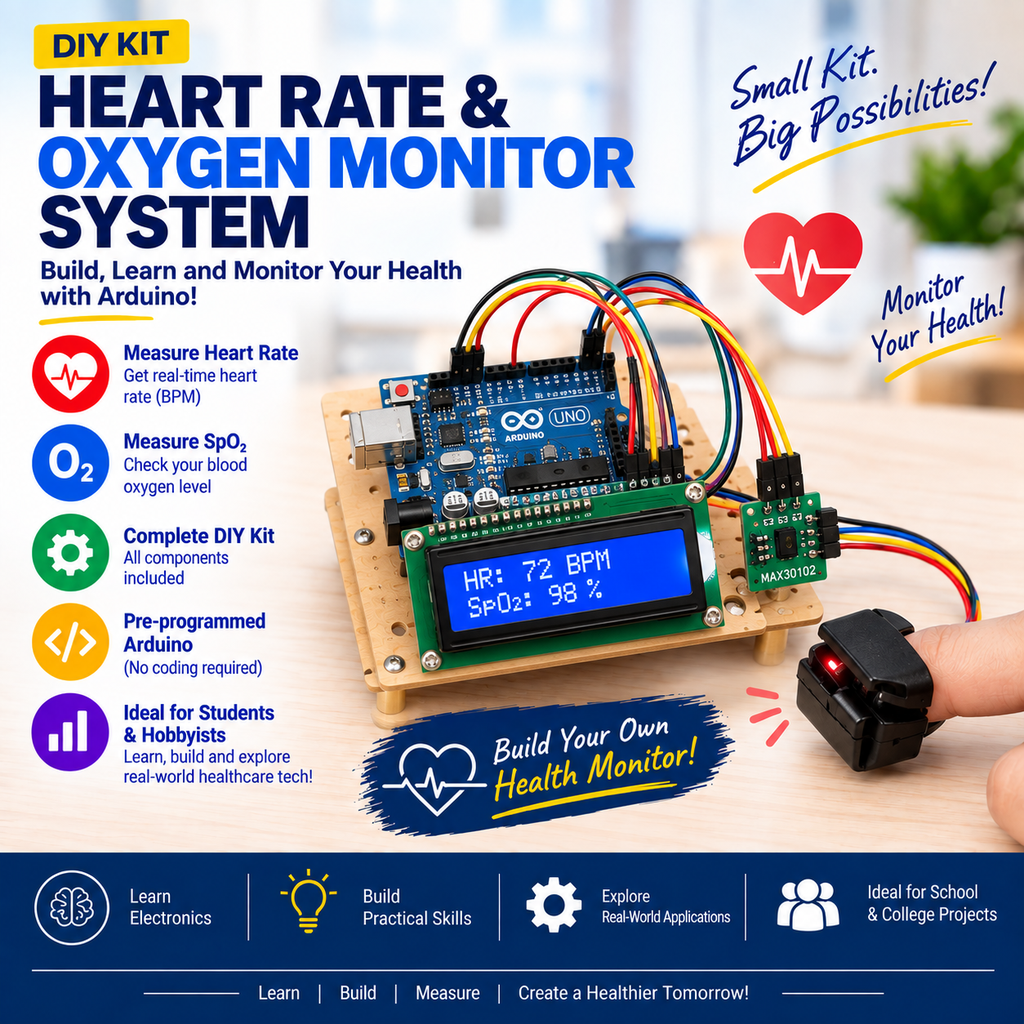
The project demonstrates measurement of:
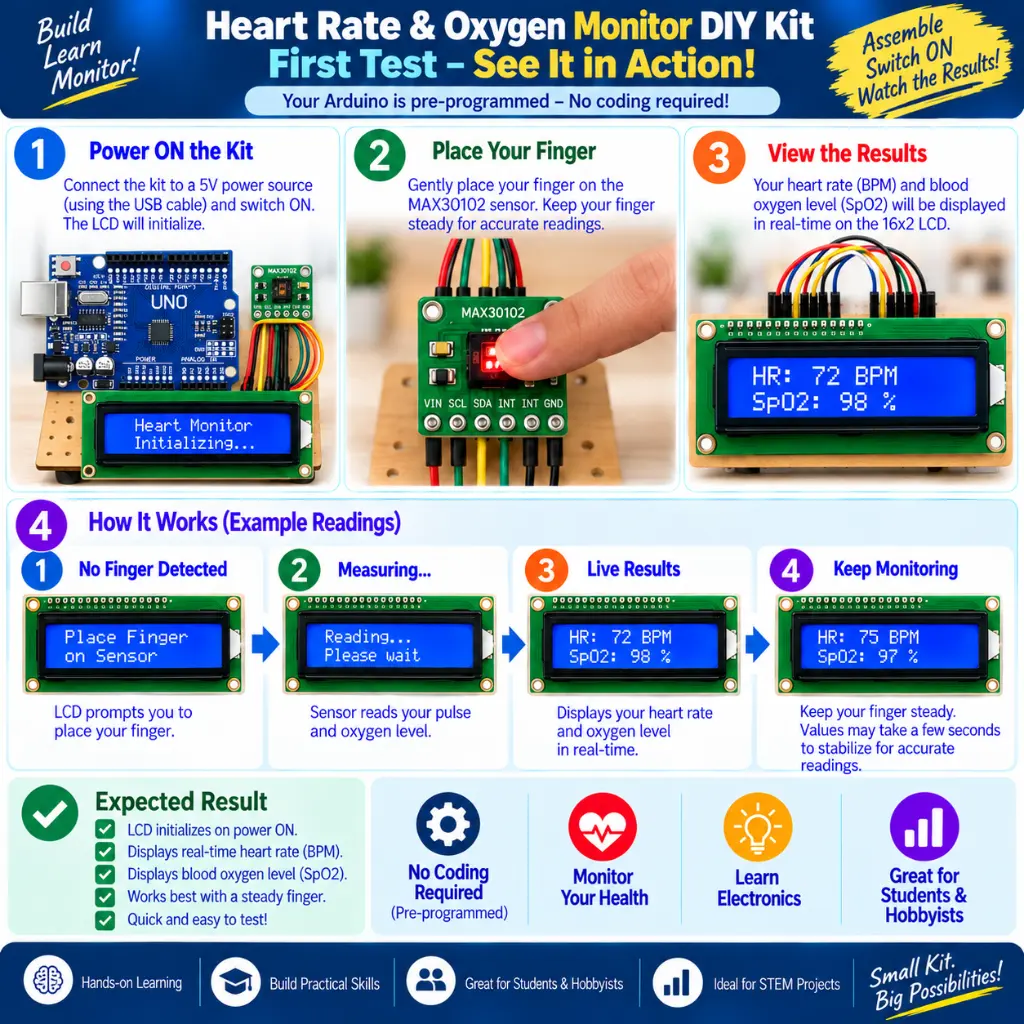
using an optical pulse-oximetry sensor.
2. Which sensor is used?
The project is designed around the MAX30100/MAX30102 pulse-oximeter sensor family.
The current RoboGears package description lists a MAX30100/MAX30102 sensor module.
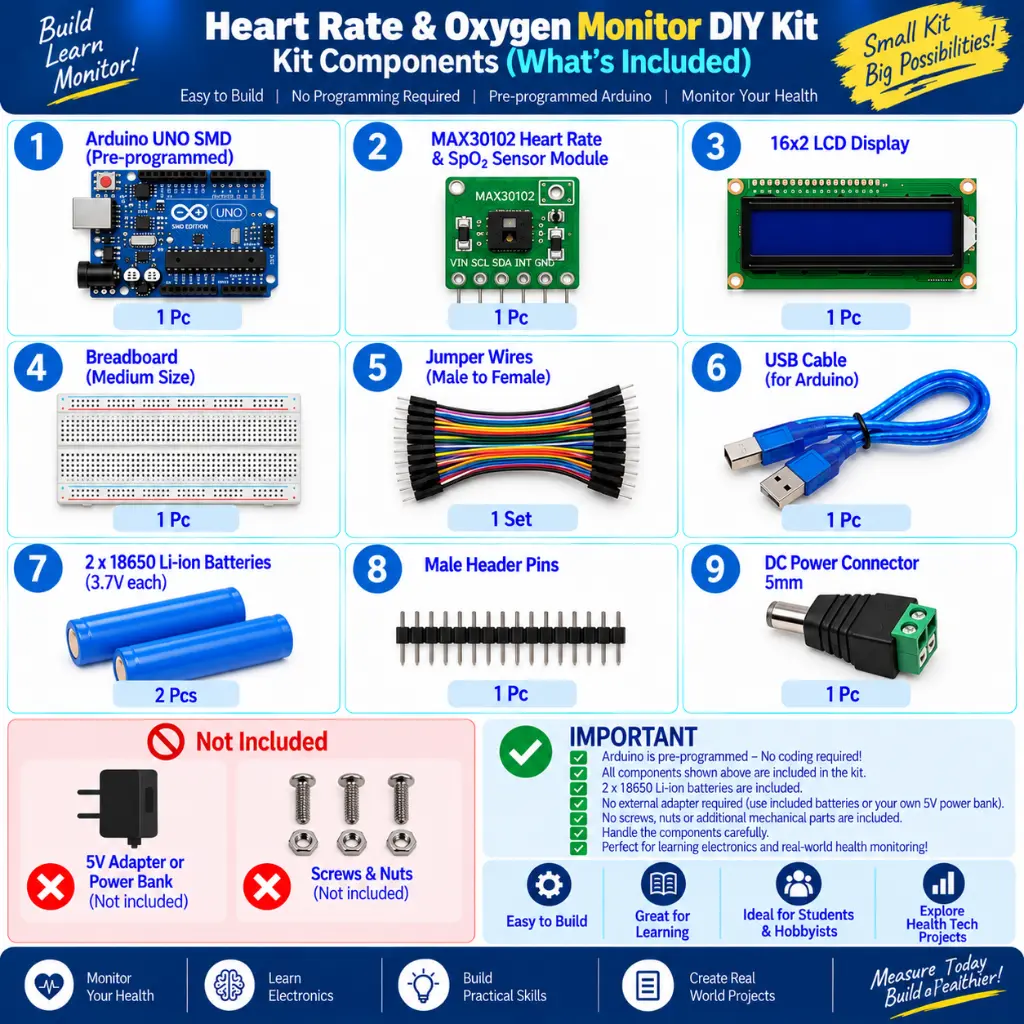
3. Is the Arduino included?
Yes.
The package includes:
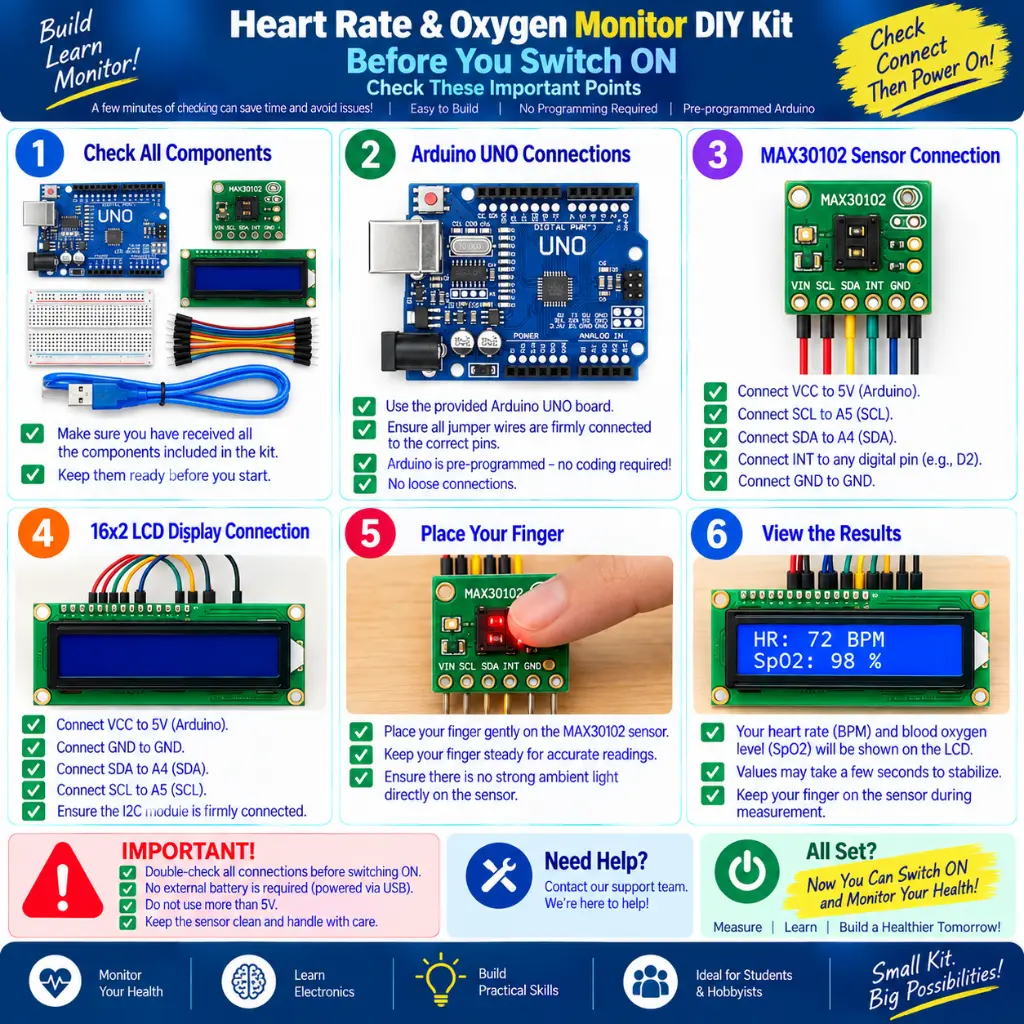
1 × Arduino UNO SMD Compatible Board
4. Is the LCD included?
Yes.
The kit includes:
1 × 16×2 LCD Display with I2C Module
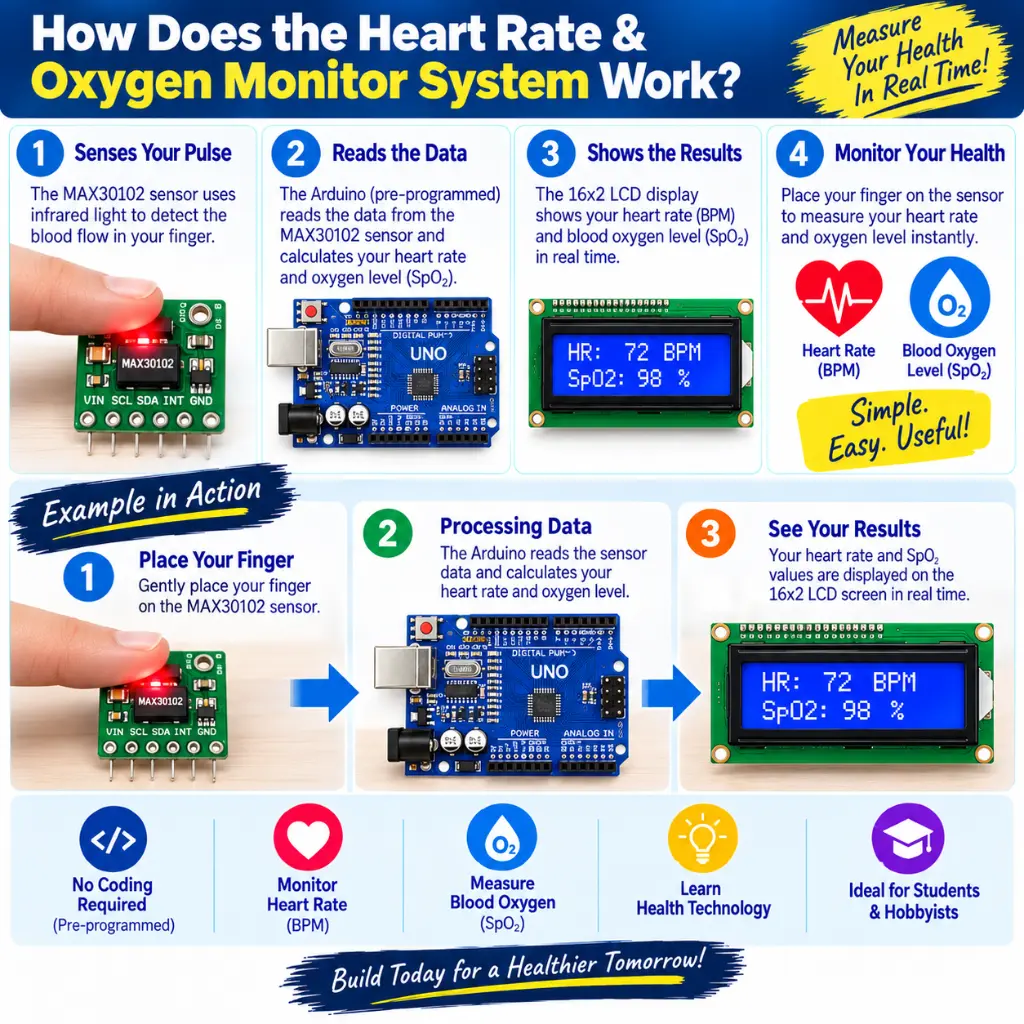
5. How does the sensor work?
The sensor uses optical photoplethysmography (PPG).
Red and infrared light is directed toward the finger, and a photodetector measures changes in the reflected optical signal.
The resulting data is processed to estimate heart rate and SpO2.
6. Does it require an internet connection?
No internet connection is required for the basic Arduino measurement project itself.
A computer and internet connection may be useful when downloading project resources, libraries or modifying/uploading Arduino code.
7. Is a battery included?
Yes.
The current RoboGears package includes:
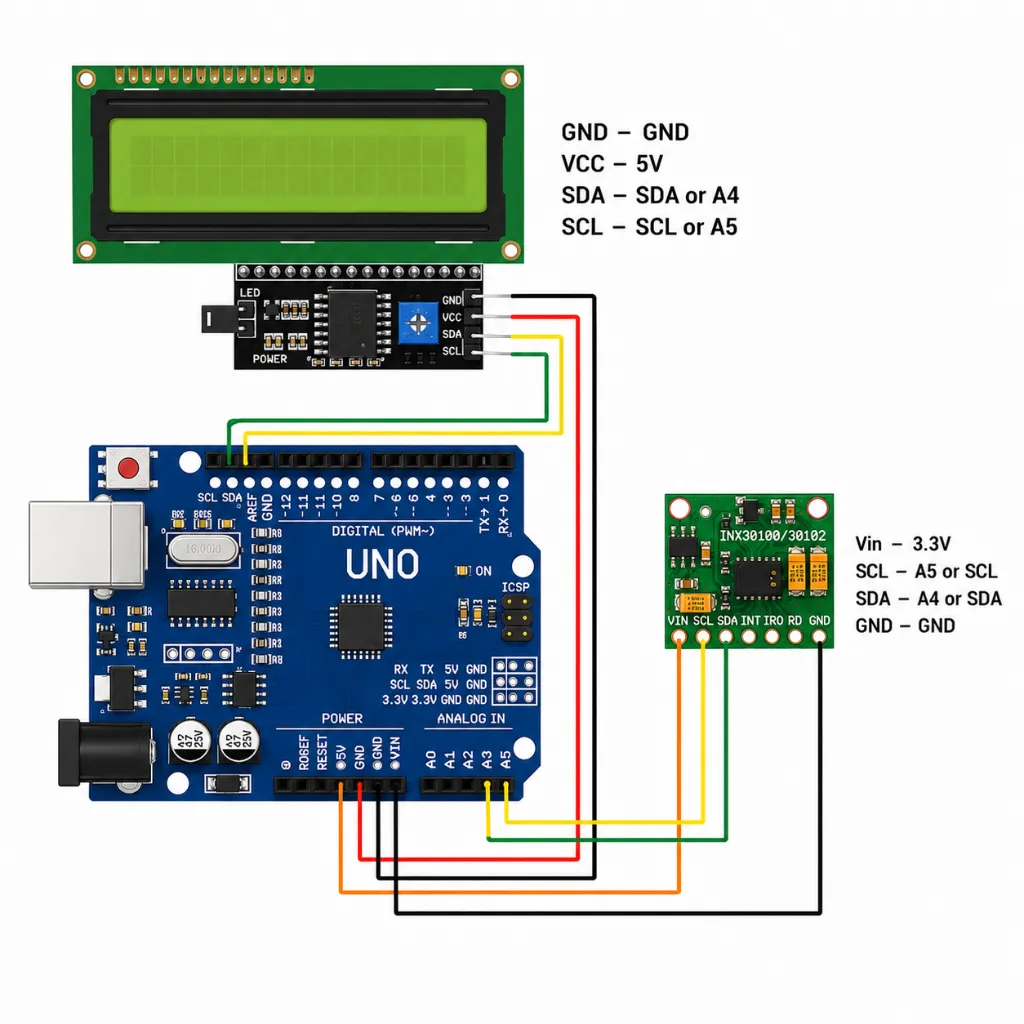
8. Can I connect the 9V battery directly to the MAX30102?
No.
The battery should power the system through the intended Arduino power arrangement.
Do not apply 9V directly to the MAX30102 sensor module.
9. Why are my readings fluctuating?
Possible causes include:
10. Can I modify the project code?
Yes.
The Arduino platform is programmable through the Arduino IDE, and RoboGears provides project code as a resource.
11. Can I use this as a medical pulse oximeter?
No.
This kit is intended for education, DIY experimentation, STEM learning and prototyping only.
It is not a certified medical diagnostic device and should not be used for diagnosis, treatment decisions, emergency assessment or clinical monitoring.
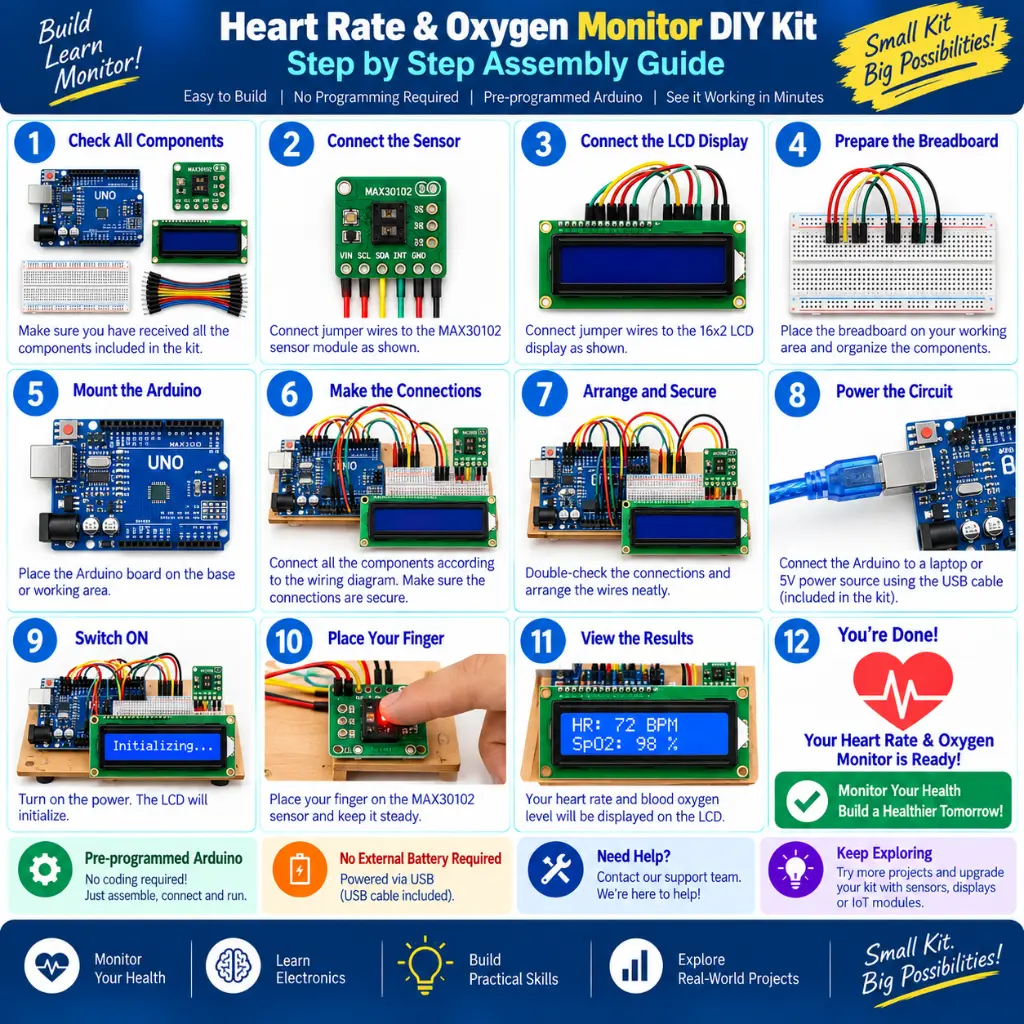
12. Is assembly required?
Yes.
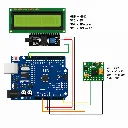
Wiring, assembly, sensor positioning and testing may be required before operation.
13. Why should I keep my finger still?
Movement changes the optical signal reaching the photodetector and can make the calculated readings unstable.
14. Can the components be reused?
Yes. The Arduino, LCD and sensor can be reused for compatible electronics and embedded-system experiments.
Important Note
This kit is designed for educational, DIY, STEM and prototyping purposes only.
Displayed BPM and SpO2 values should be treated as project/demo readings and not as clinical measurements.
If health information is required, use an appropriately certified medical device and consult a qualified healthcare professional where appropriate.
Actual component appearance or PCB revision may vary according to stock while maintaining the intended project functionality.